Urbanism7

Are These Buildings Designed for Living, or for Investment? Housing, Speculation, and Everyday Life in Contemporary Toronto

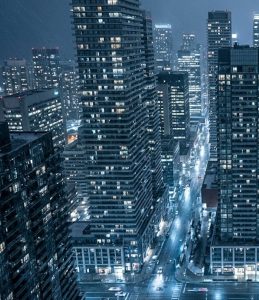
Toronto’s skyline continues to expand amid an accelerating landscape of residential towers, luxury developments, and high-density urban growth. Glass condominium buildings increasingly define the city’s visual identity, promoted through carefully crafted images of lifestyle, wellness, and contemporary urban living. Yet beneath this language of progress, a more fundamental architectural question emerges: are these buildings genuinely designed for living, or are they primarily designed for investment?[1] Continue Reading
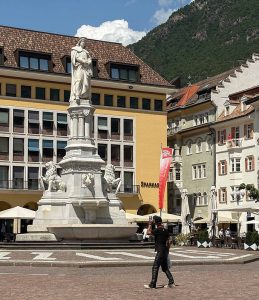
Piazzas as Social Nodes of Collective Urban Rhythm

Introduction
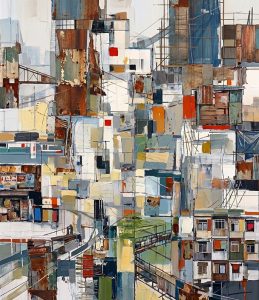
Contemporary urban theory increasingly critiques the fragmented and segregated structure of modern cities. Functional zoning, privatized developments, and automobile-oriented planning have weakened many forms of spontaneous public interaction. In response, theorists such as Paola Viganò argue for more porous and connective urban systems that support coexistence, multiplicity, and collective urban life.[1] Continue Reading

Reinterpreting Library Typology Through Void and Mass

Introduction
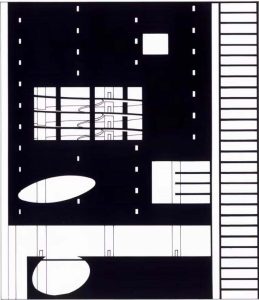
Rem Koolhaas, founder of OMA, has consistently challenged conventional architectural typologies through projects that question how buildings relate to culture, information, and urban life. His proposal for the Très Grande Bibliothèque in 1989 was never realized, yet it remains one of OMA’s most influential theoretical works.[1] Rather than imagining the library as a silent container for books, Koolhaas redefined it as an active civic institution shaped by movement, interaction, and collective experience. Continue Reading

Architecture Between People and Power Politics, Transparency, Public Space

Introduction
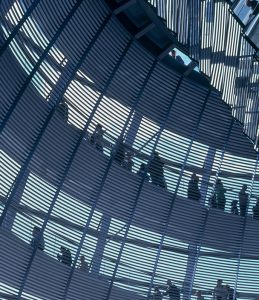
Architecture has long been used to represent political authority, national identity, and institutional power. Yet contemporary civic architecture increasingly attempts to redefine the relationship between the state and the public through ideas of openness, participation, and transparency. The Reichstag renovation by Foster + Partners in Berlin demonstrates how architecture can symbolically transform political space while also reshaping public experience.[1] Continue Reading