Theory9

Are These Buildings Designed for Living, or for Investment? Housing, Speculation, and Everyday Life in Contemporary Toronto

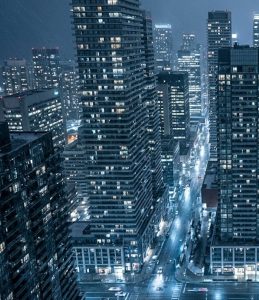
Toronto’s skyline continues to expand amid an accelerating landscape of residential towers, luxury developments, and high-density urban growth. Glass condominium buildings increasingly define the city’s visual identity, promoted through carefully crafted images of lifestyle, wellness, and contemporary urban living. Yet beneath this language of progress, a more fundamental architectural question emerges: are these buildings genuinely designed for living, or are they primarily designed for investment?[1] Continue Reading
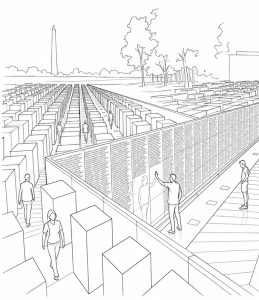

Re: Memory, Absence, and the Architecture of Experience

Introduction
Memorial architecture is often associated with permanence, symbolism, and national identity. However, contemporary memorials increasingly challenge traditional monumentality by focusing on emotional and spatial experience rather than heroic representation. Maya Lin’s Vietnam Veterans Memorial and Peter Eisenman’s Memorial to the Murdered Jews of Europe demonstrate two radically different approaches to collective memory. While both reject conventional statues and nationalist imagery, they construct remembrance through entirely different relationships to site, movement, identity, nature, and psychological experience. Continue Reading

Sustainability Beyond Performance: Architecture, Ethics, and Human Value

Introduction
Sustainable architecture is often presented as a technical challenge focused on energy performance, renewable systems, and environmental efficiency. However, contemporary architectural theory argues that sustainability is not simply about reducing carbon emissions or optimizing building systems. Instead, it is deeply connected to culture, labor, politics, and the relationship between society and nature.[1] Continue Reading

Piazzas as Social Nodes of Collective Urban Rhythm

Introduction
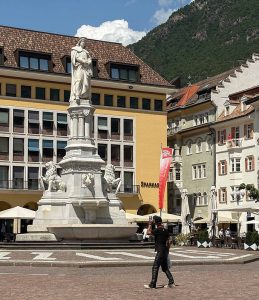
Contemporary urban theory increasingly critiques the fragmented and segregated structure of modern cities. Functional zoning, privatized developments, and automobile-oriented planning have weakened many forms of spontaneous public interaction. In response, theorists such as Paola Viganò argue for more porous and connective urban systems that support coexistence, multiplicity, and collective urban life.[1] Continue Reading

Spirit of Place Through Primitive Form Oswald Mathias Ungers and the German Architecture Museum

Introduction
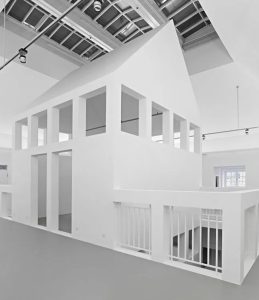
Architectural phenomenology argues that buildings should not be understood merely as visual objects or technical systems. Instead, architecture gains meaning through lived experience, memory, atmosphere, and the relationship between people and place.[1] Against the universal logic of modernism, phenomenological theory emphasizes sensory perception and the emotional depth embedded within architectural space. Continue Reading

Synthesizing Phenomenology: The Screen, the Senses, and the Real World

Introduction
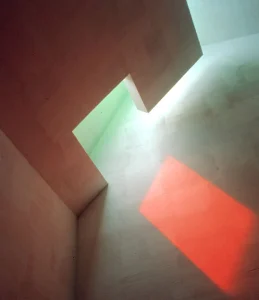
Contemporary architectural practice increasingly takes place in digital space. Buildings are designed, visualized, coordinated, and marketed through screens long before they are physically experienced. Renderings, BIM workflows, computational systems, and image-based media now shape not only how architecture is produced but also how it is understood culturally. Yet phenomenological theory argues that architecture cannot be reduced to representation or visual information alone. Architecture ultimately gains meaning through bodily experience, sensory perception, atmosphere, and material presence [1]. Continue Reading